14/01/2015

To what extent do media texts represent adolescence as a period of identity formation, self-discovery and conflict? (Essay)


To what extent do media texts represent adolescence as a period of identity formation, self-discovery and conflict?


The journey a young person takes from the transition from child to adulthood is the subject of many media texts. The viewer enjoys viewing and reading about the struggles one faces, the hurdles they overcome and the lessons they learn as they are able to confide and identify with the protagonist as the journey from adolescent to adult is one that every person will take; no matter who they are or what their background may be.


Firstly a well displayed adaptation of the journey to maturity is shown in the 2006 film ‘This is England’. Here we see a young boy, Shaun, mourning the loss of his father, a member of the Great British military who has recently perished in the Falklands conflict of the early 1980’s; at the tender age of 13. Shaun comes from a low income, single earner, one parent, female headed household. The politics of the time show that this is a difficult household to belong too as it saw the birth of the New Right ideals headed by such politicians as Thatcher and Reagan. These ideals include the idolisation of the nuclear family as the best kind of household to belong too, as well as the crippling of the working class by the lack of empathy towards them and the drying funds received by the welfare state under Thatcher’s government.


While his home-life is in tatters Shaun is also struggling with a bullying problem at school, not helped by his recent loss and the lack of empathy received from his peers. Shaun is mourning and alone at the beginning of the film and it is clear to see he has hit rock bottom.


However one walk home for Shaun turned into one of those milestones that the viewer identifies with in these kinds of media texts. Shaun meets Woody; the leader of the local skinhead gang, as well as the rest of the gang and after a conversation with Woody, the lads pick on Shaun and he turns his back on them also. However they later invite him along with them and he becomes an integral part of the gang.


Trouble then brews when Combo, the ex-gang leader, returns to the lads after he is let out of prison. Combo then uses Shaun’s grieving for his father to manipulate him into joining his nationalist group with highly racist views. We then follow Shaun’s story with this alternative group of skinheads in which he ultimately turns his back on and carries of living his life alone.


The representation of adolescence in This is England is profound and moving. The audience identifies with Shaun in his struggle to fit in and his obvious wanting to live a life that he feels his father would be proud of. However in the bigger picture the film can be criticised as an over dramatization of the adolescent period for the sake of gaining more viewers and selling more cinema tickets. For example not many young people have the misfortune of meeting an ex-convict, using him as a father figure, then having to drag a man almost 10 years his older to the hospital after this ex-convict has beaten him half to death. Therefore This is England can be praised for its representation of the struggles of adolescence in the sense of fitting in, being a loner and the need all people of all ages have of needing someone to have in their life to be yourself with; however the themes can be criticised for being far-fetched and over-dramatized to maintain an audience.


The themes in This is England and the representation of adolescence would be discounted by Baudrillard as another example of the Hyper-Real. This is because although the film is said to be based upon the experiences of the director Shane Meadows, the viewer doesn’t realise while watching that it has been scripted and tampered with to create a better viewing experience to ultimately achieve the main goal of the production company and make money. Therefore people such as Baudrillard would say that there is no real representation of what it is to be an adolescent in any media text. Just, however, the over dramatized, glamorization of one director’s experience, stroke, dream.


Another media text that has received great criticism and acclaim for these ideas of over dramatization and unrealistic themes is the teen TV drama Skins. Skins ran 7 series from 2007-2014 including a spin off “where are they now” series of three of the show’s most popular characters (who aren’t already dead) and showed how they had unrealistically fallen on their feet after doing nothing but take drugs and sleep with each other through their sixth form years, doing little to no work in the process.


An example of this is Effy. Effy is the younger brother of the main protagonist from the preliminary series of Skins, Tony. Effy then becomes the main character of series 3-4 when her brother leaves to university. Effy indulges herself with drugs, alcohol, sex and partying for the next two years of her life from 16-18 years old.


Midway through series 4 Effy suffers from a mental disorder which includes self-harm and efforts of suicide. Through this period Effy is unable to sit her A-Level exam. However instead of resitting the year. The school offers her 3 A’s in her subjects to improve the schools image.

Thus the complaints for unrealism in Skins can be backed up with a large amount of evidence of over exaggeration and hyper realism.


Similarly Baudrillard’s ideas of simulcra can be seen from Skins. This is because Skin’s created the “my life’s so much like Skins” subculture. These teens believed that Skins created an almost identical representation of their lives as it depicted everything that they themselves do; i.e. take drugs, have sex, underage clubbing.

However these teens were snubbed by the hyper reality Baudrillard talks about as they grew up with skins between the years 08-14 and where they thought they themselves were being replicated; they were actually replicating Skins. Something they thought themselves to be fathomable and real, in reality was a large picture with a small frame that did not show the fact that skins was written by two 40 year olds, and the characters were depicted by actors whose lives are nothing like the characters they depict.


However, I feel that Effy’s “mid-teen crisis” is an accurate representation of youth. This is because the rise in cases of suicide and self-harm cases from young people aged between 13-18 has risen considerably over the past decade however is still a taboo subject for the older generation, of whom are the parents of these suicidal children.


I believe that these rises in suicidal cases from teens is partially media driven. With such shows as Geordie Shore and TOWIE showing a fast paced lifestyle of parties, booze and sex, theorists such as Hebdige have shown that subcultures can be persuaded massively by media; and as such, these are today’s subcultures.


However the young, innocent teens of today, especially girls, can’t keep up with such a fast paced, lonely lifestyle and therefore do not realise what dangers they face in this race to grow up teens find themselves in these days. Being a kid is no longer cool and the sooner you can act like a mid-20 year old the better if you want to be seen as cool.


In conclusion media texts can represent the struggle every young person in the 1st world has today. However these texts are manipulated to make good viewing which in turn can create dangerous out comes for the teens that watch them. For example Call of Duty is a war based video game aimed at young males. The game is highly invigorating however it creates a very false and marginalised view of what life as a serviceman consists of. COD, as it is commonly called, can make young boys want to join the army as they complete the missions on the game and want to enhance the experience further by enjoying it in real life. However they do not realise that their vision is clouded by the smokescreen that Baudrillard described as simulcra.


Similarly shows such as Geordie Shore and Skins depict a fast paced party fuelled lifestyle of drugs and sex that young people wish to replicate as is the subcultures of present times. However these can come with dangerous consequences as it can show the ugly side of humanity as the clubs they find themselves illegally inside do not care if they are using said clubs illegally, so long as they have the money to spend, likewise, for girls, they are full of men nearly twice their age also trying to fit the “laddish” subcultures of today’s society who will seek out the most vulnerable young girl they can and try to have sex with them with or without consent in the hopes they can then gloat to their friends the next day in order to score more “lad points” and find recognition amongst their peers.


Therefore, to summarise, I do feel as though media texts can represent the development, conflict and self-discovery young people face in the modern world. However the gross over dramatization and heavy influence upon party culture and getting “notches on your belt” can have dangerous outcomes for young people who will develop drug addictions and will have close shaves (if they’re lucky) with date rape and sex abuse within the new party culture generated by television shows and the music industry simply for the benefit of being seen as “cool”. The media isn’t just to blame, but the representation of young people today can have dangerous consequences for people simply trying to impress a crowd of people, when these young people are simply trying to find love and happiness and instead are having to live with drug addiction, self-harm, suicidal thoughts and depression.


Luke Keeler

What Is Collective Identity And How Is It Mediated? (Essay)


What Is Collective Identity And How Is It Mediated?

Although there is no real definition for Collective Identity (CI) it is often described as a sense of one-ness or we-ness. In basic terms it is the traits and ideals shared by a culture and sub-culture. Examples of which are ‘British-ness’ or being a part of a group or gang such as an ‘Emo’.


In modern times CI has developed to a state where nothing is original anymore and that all things and ideals within the media are simply regenerations of past genres and identities. This is evident in modern day media where we see bands such as Arctic Monkeys who’s sound is similar to that of Brit Pop groups of the 1990’s and their image is also that of Rock and Roll greasers of the 1950’s that inspired individuals such as John Lennon who’s band the Beatles also adopted the CI of the 50’s greaser in their early stages of their career, for example their famous Hamburg performances between 1960 and 1962, which honed their performance skills and gained them wider recognition.


The ideals of nothing being ‘original’ anymore is commonly a Post-Modernist view. In sociology Post-Modernism (PM) “opposes each of the assumptions of modernist thinking: Relativism; there is no such thing as valid or invalid knowledge. Death of the subject; knowledge as control rather than liberation; Grand theories are inadmissible.” This is relative to Collective Identity and theories of Sub-Cultures as the members of a sub-culture wish to be considered different from everyone else. For example in This Is England (2006) the film follows a young boy protagonist and his journey to finding himself when he falls into a gang of ‘Skinheads’. The film represents the Skinhead community as a group of rejected members of society who decide to rebel against the conventions of 1980’s Britain and create their own subculture. However they are also shown as racists, drug takers and vandals and therefore are represented within a negative light.


This is relative of all sub-cultures within British society as many sub-cultures are shown to be young delinquents from the MODs and Rockers “battles” at Brighton in the 1960’s to the CHAVs of the modern day. Both are seen as violent, anti-establishment, wasters. The way this would mediate the CI of these groups is negative and thereby states that society is against collective identity and individuality. Another example of this negativity of CI within the media is Quadrophenia (1979). The film is about a young male protagonist who longs to be a MOD. The film shows MOD gangs and Rocker gangs fighting eachother, taking drugs and having sex. In one scene; the MOD’s are seen fighting the Rockers in Brighton, before trashing the town and rioting, fighting the police and eventually some MOD’s are arrested. Afterwards the protagonist, Jimmy, is kicked out of his house and finds that his friends and fellow MOD’s are growing up and moving on with their lives. This shows Jimmy’s dedication to his subculture to be much greater than his friends; he finds himself lost and alone and decides to take his own life by driving his Vespa over the white cliffs of Dover.

Quadrophenia, like “This is England”, is an excellent example of how sub-cultures and gang culture can consume individuals lives and how it can ruin them. Driving them to do scarring acts and deviant activities, as well as confusing the minds of these people and twisting their reality of what they see to be true and worthwhile.

The media mediates CI in films and music by showing protagonists losing their way and “finding” themselves via gangs and life changing experiences. However these can be glamourized and don’t show the true results of how people’s lives can be ruined by the things they involve themselves in or the views they internalise.


An example of this can be seen in the film “The World’s End”. The film portrays five friends who reunite to complete a pub crawl they began 20 years earlier at 16 when they left high school. The gang aimed to live their lives with freedom and flair and took inspiration from the quote at the beginning of the track “Loaded” by Primal Scream (A band of the Time). The quote goes as follows… “Just what is it that you want to do? We wanna be free, We wanna be free to do what we wanna do, And we wanna get loaded, And we wanna have a good time, That's what we're gonna do, No way baby let's go, We're gonna have a good time, We're gonna have a party.” However, typically, four of the five gang members grow out of the adolescent dreams of living fast, dying young, making alot of money from doing very little; all that is, bar one. The main protagonist, Gary King, fails to grow out of the views he had as a young man, he still owns the same car, wears the same clothes and has the same attitude as he did at 16, now 36 his friends are shocked to see him as the same Gary they left at high school.


This case study shows how people at a young age can have high ambitions of partying and being young forever, but how most grow out of this mold and mature into normal adults with average jobs, families and sub-urban houses. However some people never leave this longing to be young behind. And as they grow older, the less they do with their lives, the more they want to keep that young at heart state of mind. These are the types of people who would become innovators or retreatists according to Merton’s Strain Theory; meaning they would be the people who turn to crime to make money or drop out of society and take to heavy drinking or drug abuse. The media representation of these people however, always seems to result in a kind of hero label. The dropout protagonist, particularly in “The World’s End”, is made to be the coolest one of the gang and actually is the most appealing to young people. The ‘let’s get drunk and party attitude’ of someone like Gary King is extremely appealing to young people who, to quote Robbie Williams, don’t want to end up like their mum and dad. Therefore this over glamorization of people who over commit to their gangs and sub-cultures from a young age could have very serious consequences in reality for young people in the world today.


In contrast to this the media can show CI to be a good thing that we can all and should all share. For example the sense of “British-ness” we all felt in 2012 when the media was pumping patriotism into society like an engine with a millennium wheel for a cog, Big Ben’s for piston’s and oil leaking all over it bleeding red, white and blue; before being stamped with the monarch’s symbol and shipped too every house, flat and council estate in the country; 2012 was without doubt the most patriotic year this country’s seen since 1977, and the Sex Pistols weren’t around to steal the queen’s thunder. The media in 2012 had a field year, so to speak, the Olympics, Paralympics, Euro 2012, Queen Elizabeth II’s Diamond Jubilee and of course the closing ceremony of the 2012 Olympic Games was a showcase of how the British identity is rife amongst us all. Every house on every corner was draped in bunting like a British year round Christmas.


The media in 2012 was able to showcase true British CI. Union Jacks, Tea and Fish and Chips. The way the media went about this was plastering print production, internet newspapers and social media with “pride to be British”. The Diamond Jubilee concert featuring some of the best living acts Britain and the Commonwealth have known, such as the living Beatle Paul McCartney. The closing ceremony concert for the 2012 Olympic Games featuring a band for 2 generations, The Specials, New Order and, of course, saw the reformation of Blur.


The year 2012 serves as a prime example of how CI can be mediated in a positive way. It shows a large culture of people who all agree on being proud to be British, coming together and celebrating their country. However some would say this year posed as a distraction to focus the masses on waving union jack’s and getting behind their country to try and spearhead an economic recovery after the 2008 crash, re-kindle faith in the government after the London riots the previous year and to try and gain more support for the Monarchy of the United Kingdom. Neo-Marxists would believe the mass hysteria of 2012 was only serving as another way to repress the masses and make them get behind a system that was planning to abolish their NHS and was recovering from a government tax dodging scandal. Similar to the conspiracy theories of the September 11th attacks of 2001 where some theorists believe that George W. Bush was able to use the mass patriotism to his advantage and manipulate the polls he was behind in before the strikes, to stay in office for another term and invade Iraq            which some believe to be a war for Oil as opposed to fighting terror.


In conclusion collective identity is the one-ness one can feel in a group or gang. It is the sense of belonging as well as being different and standing out, this can be seen specifically in sub-cultures throughout history like the MOD’s and Skinheads as mentioned, equally however can be seen in a wider sense like British-ness. It is mediated to mainly make people see into how people have lived and what can happen as a consequence of over committing one’s self to a gang or sub-culture and its views from such a young age and internalising these views later in life, which then leads to these rules being abided by for the rest of their lives. However it can also be mediated to perceive bad things as good and vice versa, this is seen in “The World’s End” with the glamorization of Gary; and also is seen in Channel 4’s ‘Benefit’s Street’. The media representation of people who live on benefits is that they are lazy, job-less, alcoholics or drug addicts; represented well in “Shameless” where on character, Frank Gallagher, lives on benefits and wonders around the estate drinking and getting into trouble with no interest of finding a job etc. However there were some who were thieves and the like, it showed that most of the people on the show were working one or two jobs with families and needed the benefits. The media can manipulate and influence public opinion and can be a base for people’s CI, the way they perceive things and the way they think. It is a very powerful mechanism and most people’s CI is born of the things they watch, listen and read in the media.


Luke Keeler

03/12/2014

Come Together//Echo Smith Case Study

Come Together
// Ecosmith
     I’d say that the genre of “Come Together” (CT) displayed in the music video is indie pop. This is because the band suits the stereotype of this genre. For example the band all stands in a room with guitarist, drummer, keyboard and singer. This stance is seen in many indie pop videos for example blink 182’s “All the Small Things” video and Green Day’s “American Idiot”. As seen below.
 Blink 182

Echo Smith

 Green Day
     Genre characteristics can be seen in all music videos. The idea is that it allows a visual representation of the type of genre the song and/or band belongs too. For example it is common, as seen in the last slide, for rock bands to have a stage set up style of the group performing; similarly it is common in rap videos to have visuals of North and Latin American ghetto’s as well as the rapper themselves as the centre of attention surrounded by money, materialistic goods and attractive, barely clothed, young women. The reason directors of music videos so this is to hone on to the target audience and visualise their fantasies of what they want to be and offer them a guideline to their self identity. This therefore makes the music video effective as the viewer sees what they believe to be “cool”, what they wish to be and how to shape their image to achieve this image. Thereby making the viewer wish to see more videos and see more songs.

Music is used by people as a method of escaping their lives and therefore living in a fantasy, their fantasy which can be unique and personal; or can be generic and relatable. The music video can give a visual representation of these fantasy’s and can often be used to create a narrative, fantasy or a behind the scenes look at a band “off camera”. By using the music video as a method of creating fantasy the viewer can help to build their own story within their own head and steal ideas from what is often cons cued as the artists fantasy, however is usually the fantasy the director sees when listening to the song. This is why music videos are often far fetched however share common conventions and inter-textual references, drawn from personal experience, pop culture and (often in rap) rivalry with fellow artists.


This is a poorly shot home video, from YouTube, of Seth MacFarlane's adult comedy, American Dad. Pictured is the main character Stan fantasizing a narrative in his head while listening to a song by his favourite band. This nicely represents the point of people making their own ideas and connotations of songs and the meanings of them.
This is Eminem's music video to "Like Toy Soldiers". The track is about rap rivalries and the use of music videos to express these rivlaries. The track and music video also acknowledges at the end the lives lost due to these rivalries including such names as Notorius B.I.G and Tupac Shakur.

Screen Shot of the dead rappers who lost their lives to gangs and rap rivalries rife within the industry in the 1990's.
The idea of fantasy is seen also within Echosmtihs' video. However it seems to become more of a sexual fantasy coming from the older teacher towards the young female in the group. The notion that sex sells is becoming increasingly popular and began in the 1980's with artists like Madonna and Kylie Minogue. The young girl is used as a sexual object throughout the video for male fantasy; the video, like many pop music videos, is targeting young males with the age range of 13-25 but will satisfy men of all ages with the links to "sex sells" tactics.
This can be seen in modern day also as the best selling artists these days are mainly young women barely over 20. For example Miley Cyrus, Nicki Minaj, Katy Perry and Rihanna amongst others, all of whom have one common theme: music videos with them center stage dancing around barely clothed with focus on their large breasts and bottoms.
Nicki Minaj's latest release "Anaconda". The music video is all about boobs and bums and is used as one giant inuendo for sex, the track peaked at number 2 on the US billboard chart.


The LP cover for Nicki Minaj "Anaconda"

"Sexercize" The 12th track on Kylie Minogue's latest studio album "Kiss Me Once". The album and track names and content are clearly using sex and sexual innuendo's to sell the album.


Miley Cyrus' notorious 2013 VMA awards performance with Robin Thicke. The video gained 3 million views on YouTube and through the star from Disney star to celebrated sex object/recording artist.

The vastly superior age of Robin Thicke (37) from Miley Cyrus (22) is very similar to the sexual references in the music video for Come Together by Echo Smith where the much older teacher has a strange and inappropriate attraction to the young female student.

This symbolises the direction the music industry is heading where something such as Miley's "Twerk" is deemed perfectly accpetable on a man who would have been 31 when Miley reached the age of consent is perfectly capable of having someone that much younger than him perform highly publicized, soft core sexual acts on him; whereas the teacher in Echo Smiths music video would have been handed a prison sentence for something equally as inappropriate. Regardless of the consent from the female.

However girls are not the only ones using the tactics of sex sells and using women as objects within the music industry as we can see from Robin Thicke's "Unrated" music video of Blurred Lines featuring Pharrell Williams. (The following video contains strong nudity)
 

Here we see Thicke (37) and Williams (41) dancing around with girls half their age completely naked, the video has no narrative, no effort into the production; it can only be described as soft core porn, yet this is the way music videos are made in the 21st century. It would seem that females in the music industry have suffered a nose dive from grace within the music industry from the 40's where females were still desireable within the industry without being literally naked.

Similarly one hit wonder Eric Prydz achieved great commercial success with his track "Call On Me" which also features a highly sexualised music video.
This message is put across within the Echo Smith music video where the lead singer is slightly sexualised and the older male teacher is literally going crazy over her. However the pink lip stick and little use of herself as an actual sex object (ie the lack of nudity) seems to be a throw back to the days when women didnt have to be naked to be famous in the music industry.

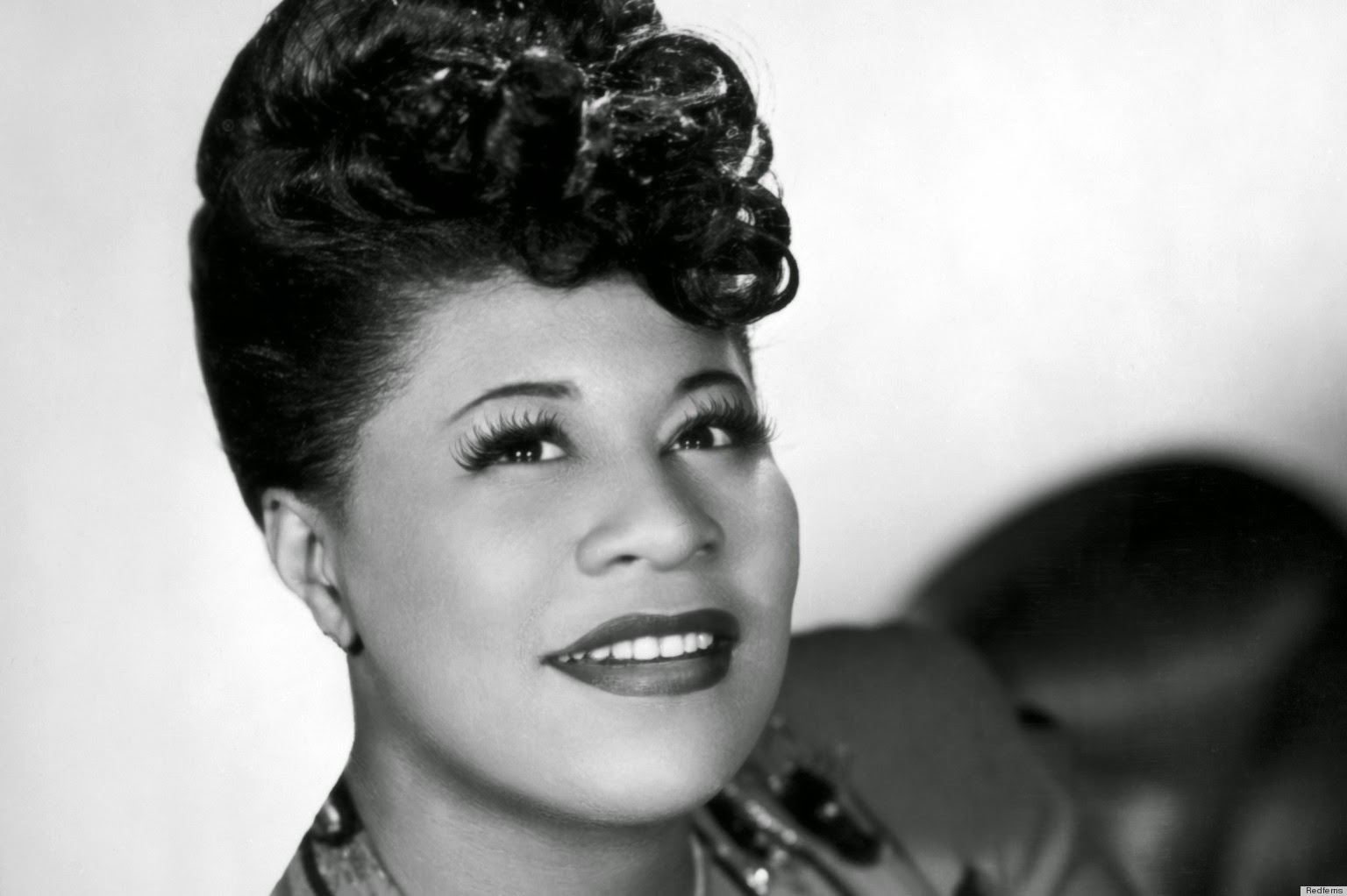
However this isnt always the case and some female artists have achieved great success from their natural talent without the necessity to rely upon looks; for example Adele and the late Amy Whinehouse. Both now considered cult legends of the British music industry who's image and grace is similar to that of stars of the 1940's such as Ella Fitzgerald.


 Amy Whinehouse
 Ella Fitzgerald
Adele
Sydney Sierota (EchoSmith)
The location of the music video is set in a high school where the band members are in “Saturday detention” which is an American phenomenon. This links heavily with the 1985 film ‘The Breakfast Club’. The synopsis of The Breakfast Club (TBC) states ‘Five high school students, all different stereotypes, meet in detention, where they pour their hearts out to each other, and discover how they have a lot more in common than they thought.’ The key word to highlight here is stereotypes. This shows that the music video created by Ecosmith is supposed to represent a stereotype of youth music and behaviour.
However the music video also stereotypes the lead singer into what females of the music industry are represented as in modern times. According to Goodwin’s theory the visuals are representative of more than just a narrative to accompany the song and in this instance, the singularity of the female lead singer, front and centre stage in nearly every frame, is the main focus of the music video simply because sex sells. Many of the angles and shots have a sense of voyeurism to them with the microphone not being sung into but being used as a method of seduction and male fantasy, mainly being made to make the viewer imagine the microphone as a penis.
 This has strong links to the 20th century novel ‘Lolita’. Lolita was based on an adult male “Humbert” who has a strange infatuation towards a 12 year old girl he nicknames “Lolita”. The two subsequently tour North America and Humbert bribes her for sexual favours. This is relevant to the music video as the teacher appears to have similar feelings of lust towards the lead singer and she is made out to be a sexual figure desirable to mean young and old.
Still from Lolita (1997)


The Breakfast Club (1984)